Cd9088cb Datasheet Pdf
It’s been a bit quiet around here lately – I’m just swamped with work, and it never quite goes away, but neither does the desire to do something for my own enrichment and enjoyment and the desire to blog about it. Seeing as I enjoyed reviving a few of kits, I wondered if there was anything out there I could build which would be a little more attractive and perhaps slightly more sophisticated. I was aware of the which looks to be a very nice kit, but a bit on the pricey side for an AM only radio. So, I rummaged on eBay looking for radio kits, and surprisingly, there were quite a few! Sadly, a good number of them are very opaque in the sense that they rely on a digital auto-scan FM receiver chip and there really isn’t much to them aside from that and an amplifier chip. I settled on one which was listed as CF210SP AM FM Radio Kit, with a few other “related” words thrown in.
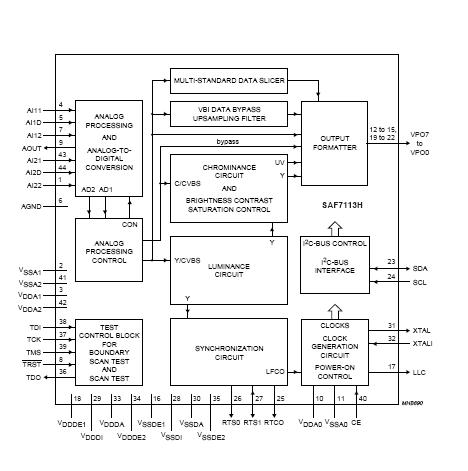
CD9088CB datasheet, cross reference, circuit and application notes in pdf format.
As expected, it’s a dual band (AM/FM) radio, with the whole kit coming in at a reasonable AU$7.99 including postage and comes complete with exterior casing. The big downside? Everything is in Chinese. The only English you will find is in the listing description, which isn’t particularly easy to read nor informative: CF210SP is a new type of radio FM, AM two band radio, the FM band using the CD9088 chip, which uses patch element SMT package, the receive frequency range of 76-108HMZ, not only to accept the FM radio, can also receive campus radio and part of the audio signal of the television stations; AM band using direct IC the TA7642, receive frequency range is 525-1605KHZ circuit is simple, assembly success rate, a better selectivity having a little. Amplifier circuit using TD2822 special function ICs having loud. Sound quality is good. While I am of Chinese decent, I’ll have to admit that I can’t read, nor write in Chinese.
Even though the instructions are in Chinese, I didn’t feel that to be a big impediment because when it comes to components and schematics, the drawings and markings transcend the language barrier. Just another way engineering solves the day!
Luckily for everyone, the board also has very good silkscreening to judge by the listing. As a result, I accepted the challenge and put in an order for two kits. I suppose it’s just a habit – if you order kits, you know they come with just the right number of parts, so there’s no room for mistakes. Ordering two ensures that you have some spares in case things do go wrong This post will be a little review of the kit, along with tips and hints especially for English speaking constructors. Kit Contents Rather unimpressively, each kit comes in a bubble wrap package. Trouble was already spotted when a loose screw was seen rattling inside the bubble wrap – the components have broken loose and the only thing preventing them from going everywhere was a thin and somewhat torn bubble wrap.

The case for this was soon found – the components are actually wrapped inside a cellophane bag, but that sort of material has a tendency to tear when punctured by the sharp component legs – quickly the smaller components work their way out. Sim girl full version. As you can see, inside the package, you get the case halves without anything populated, a front tuning label with the absolutely bogus Paeansonic band, the main PCB, the speaker, a telescopic whip, and a bag with the “rest” of the parts. It’s nice to see that the plastic shell has a captive battery door, which makes it a nice touch. The downside is that the moulding of the case is a little slack so the halves don’t fit together seamlessly with a few rough edges, and there are areas where the plastic was so thin that it cracked in transit and a little super-glue was needed. The components being bagged inside a cellophane bag may be cheap, but doesn’t respect the ESD sensitive nature of the ICs used, and is a recipe for bent pins. Rather nicely, the PCB is a single sided paper-type board with silkscreening on both sides which is very descriptive, and solder mask on the rear. It seems to have a lacquer finish to stop the pads from oxidising, but is not otherwise tinned nor plated.